Friday, 3 August 2012

THE WICK SUMMER EDITION 2012


If you have a chance to be in Hackney Wick area you will be able to grab the second edition of the local free paper The Wick where you will find a lot of info about what is happening in the Fish Island. There are many articles about Photography in relation to the Games. There is also a page about the Art of Dissent show where David George, Chris Dorley-Brown and Alessandra Chila's images are available. Very interesting special edition with a 24 pages supplement about the local residents.

Monday, 30 July 2012

OUR FIRST SHOW IN SHOREDITCH


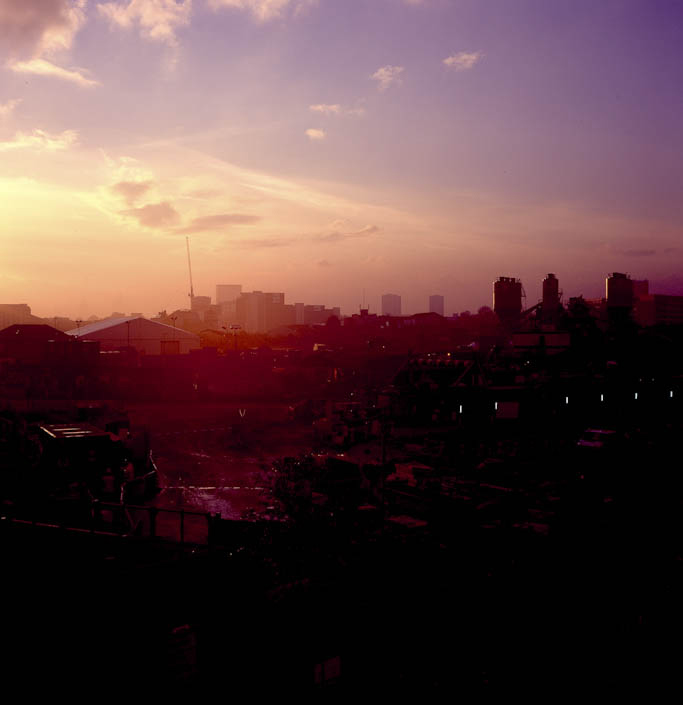
Our first official collective show is finally taking place all the way throughout the Olympics and Paralympics at the Hox gallery in Shoreditch. This first presentation focuses on the transformation of the urban landscape in the Lea Valley area. We managed to put this exhibition in two weeks and I am very proud of the response from each artist photographer involved. The host venue has also been one of the best experience I have ever had. An opening date is still to be confirmed. This show is open to all public at any time and is free. Located in the heart of Shoreditch it is very accessible by all type of public transports. Nearest tubes are Old Steet, Liverpool street and Shoreditch High Street.

Photograph copyright Arnau Oriol Sanchez

Sunday, 15 July 2012

THE ART OF DISSENT


We are proud to see three of our photographers being invited to show their works in this heavyweight publication. Chris Dorley-Brown, Alessandra Chila and David George have been selected to present their personal visions of the East-End as we approach the Olympic Games. Marshgate Press has not only gathered visual talents but also very high profile writers and analysts. You can find all the info following this link

info@theartofdissent.net

This project is also a show.

Art of Dissent at See Studio 5th July – 1st September

See Studio presents The Art of Dissent, a group show displaying work created in response to the London Olympics and the radical transformation of the Lower Lee Valley brought about by it (all contributors to the book ‘The Art of Dissent: Adventures in London’s Olympic State.) The works included in the exhibition actively resist the Games’ consensual symbols and images; they activate the history of Hackney Wick and the marshes against the politics of effacement, and critically explore the imprint of London’s Olympic State.
Jessie Brennan, Alessandra Chilá, Chris Dorley-Brown, Fantich & Young, David George, Giles Price, Jim Woodall, Gesche Würfel.
Associated events at See Studio include artists talks and films 6-9pm 2nd August as part of TimeOut First Thursdays.
See Studio is an Exhibition Space in Hackney Wick, London adjacent to the Olympic Park that commissions and works with artists, designers, photographers, and film-makers to produce creative commercial solutions as well as innovative new artwork for exhibition and publishing purposes.
13 Prince Edward Rd, London, E9 5LX
0208 986 6477
info@seestudio.com

Wednesday, 11 July 2012

OPEN CALL FOR SUBMISSIONS

The collective is now looking for artist photographers with strong body of works around the theme of the London East End in relation to the 2012 Olympic Games phenomenon. The two angles required described below will enhance the quality of the works already gathered.

1/ We are looking for projects taking place during the Olympics and Paralympics within the site or on its peripheries.

2/ We are also very interested in presenting longer projects that would take place after the Games.

Each photographer will be asked to present a short presentation with informal statement and visuals either completed or in progress. David will be available for discussion and advice if necessary.

Please email your submissions to david@2exposures.com
There is no deadline and no fee.
The collective is a non-profit platform for artists using Photography who are questioning the medium and the urban/human landscape. We will also consider video works as an extension of the photographic stillness.


Wednesday, 23 May 2012

MAPPING THE CHANGE


Arnau Oriol Sanchez, Chris Dorley-Brown and David Boulogne's works are part of this long temporary Summer exhibition at the Hackney Museum. This show is mostly History and Communities orientated. A certain emphasis have been put on Arnau who is commissioned by the Museum to capture the change of the borough in specific areas. This exhibition is versatile and can be read like a book. There are two photographic areas. One presents a slide show of various artists. The second one is a montage of medium size prints over three walls, those pictures are all portraits of local residents.

cover photograph Arnau Oriol Sanchez

Friday, 11 May 2012

ARTERIES OF A NEW EAST


Arteries of a new East is the definite title for this series I started in December 2009. I will display this body of work I ended photographing in December 2011 in two presentation formats depending on the specifications.

My first choice resulting from my numerous walks come as a selection of montages of six images with title at the bottom. Each walk selected would be mounted on a traditional dark wooden frame. The images would adopt the similar pattern of 6 (2 columns of 3) vertically and should be reinforced by a traditional thin mount on which the title should be engraved at the bottom. The idea is to mix the high digital quality of the prints (from film) with a classical method of showing ancient documents. I find that mix the perfect way to engage with the subject I have been dealing with in its form and content. Each frame are 40x50cm and they are not limited in numbers. 
This presentation is already available at the Hackney Museum as part of their archives and recent shows related to the Mapping the Change project.


My second choice comes as a collection of individual images. Each of them would be displayed in a 20x30cm light white frame. Ideally showing a lot of them together would make more sense as they would produce a journey by their singularities and dispersion at the same time. Here again there is no limited numbers.

Meanwhile I have been working on essays and I am trying to coordinate very specific and alternative events around the project. Shows, essays, press articles, installations and happenings are in the pipeline. If you have any interest in collaborating with us please contact me. My time on this transitional journey of the East part of London as a photographer is now over. I may try to work on other aspects of the area or the Olympic event itself but nothing certain at this stage. Below an extract of my essay.


"The East London I am unveiling through my walks is not a final statement but it depicts that transitional state. It questions deep social awareness and political agendas. Not initially conceived as an ideal place for the people, the East has found throughout History its peculiar identity. It is a hybrid combination originating from its own people that forged a sense of belonging. Its new proximity to the centre will deeply change the unique and alternative social context by appropriation through mass investments in a vast and lucrative opportunity.
The photo-montages expose an effervescent burying of the old urban landscape by a new mainstream one. Thanks to uninspired governing bodies a creative stimulus arise from the local resident to map its identity despite its apparent disappearance. The uniqueness of the zone will be remembered because of the values it inspired. The landscape will vanish but its memory will last. Those arteries are still fuelled with passion and not profit. They are vital to a healthy democracy. The East once relegated is now melting into an unavoidable conformism. Local residents still have a voice but that will only last the time they can afford to live it."


Friday, 6 April 2012

ARNAU ORIOL SANCHEZ INTERVIEW


1/ First of all, what were or are you motivations for capturing Hackney? 
Was you decision initially guided by the bid won in 2005 or was it irrelevant?


The bid was irrelevant. When I came to live in London I came to Hackney and I have been living in the borough for the last three years. I have recently moved to South Tottenham because my landlord sold the house. I wanted to continue living in Hackney but it has been so hard to find a decent place with a reasonable price. So I moved a bit further North to Tottenham, and I imagine Tottenham today is like Hackney 20 years ago. Rough, with poverty, unemployment and non fashionable.
My main motivations where the fact that I was living in Hackney, and that everybody was talking about the change, about how it used to be, how the Olympics weren’t bringing positive things, the gentrification and so on. I started photographing the borough. Then, by chance, I came across the Hackney Museum. I had been shooting a project about the Ghanaian community in Hackney and I thought the Museum might be interested in it somehow. I visited them, they liked it, and then they told me they were looking for a photographer to document the change of Hackney Wick. They were basically looking for images that showed the change, but there wasn’t a specific brief. The main output for the images would be initially the archives, and I felt quite enthusiastic about that. I was living in Hackney, and to be a photographer and have work in the Hackney archives made me feel a certain pride. Also, to be able to merge a commission with a more personal approach to a subject made me feel quite happy and privileged.


2/Why did you decide to use the old square format and slide films with today's digital technology?

It was because of my choice on the approach. I could have taken a much more classic photojournalistic approach with this project, with a more political and social hue, looking at those particular communities affected. But I started photographing too late, the fencing of the perimeter was already erected, the demolitions had been done. The initial output of the pictures were the archives, so I thought that a straight portrait of the changing landscape would work. I thought a 120 film camera would help to take a more reflective approach. I also like to shoot on film as I get later more excited about seeing the results, and also leaves me some time to keep on shooting without having seen yet any result. With digital I tend to look and roughly edit pictures the same day I shoot, that means next day I am shooting I am conditioned (for good or bad) by the results.
Slides? I just love the texture and color. And somehow, it brings me back to the older Hackney I would have liked photographing. 


3/You are still being commissioned I believe by Hackney Museum to capture the daily of the borough prior to the Olympic event. Can you tell us more about this unique and engaging patronage? Are they considering to extend the project after the Games?

On that particular project they are not funding me anymore. They did during 6 months, and then I continued the project on my spare time. However, the council commissioned me another project about the cultural diversity in Kingsland Road. I still do regular work with the Museum but unfortunately is more about documenting the ‘Mapping the Change’ project rather than being part of it. I am not sure about what are their plans after the Olympics, but I will probably keep on shooting as long as I live in London.

4/In the similar vein to Alessandra Chila you have been particularly drawn to details but you also managed to create a body of work that encapsulates both landscapes and people. Can you tell us more about that hybrid documentary style?

The Hackney Wick area is bizarre: there is the wilderness of the Hackney Marshes, people who lives in barges and in tents, abandoned warehouses reconverted in artists studios, dog walkers, binocular bird watchers, electrified fences, blue wooden walls surrounding new developments and covered by announcements of computer generated future, men with yellow fluorescent vests patrolling. Many of these things can only be found on a changing area. I was looking to capture/document landscapes that will disappear but also people that live, work or walk around the area. 


5/ How would you rate or describe the photographic investigation you produced as a non-British born citizen. Did you find it difficult sometimes to engage or relate to the issues experienced by such an event?

Hackney has a strong sense of community. If you live there, you feel being part of it. The Museum helped to make me engaged. I took many portraits for the Museum on a project called Hackney Voices, lead by Rebecca and Tony from Sweet Patootee. It is a project recording the memories of people who have been living in the borough for a long time. I got to know these people and with some of them had long conversations over a cup of tea while I was visiting them in their houses to take their portrait. I heard stories about the old days. The research I did also helped me to get fascinated by the area.
I came across the work of writer Iain Sinclair, and his chronicles of Hackney. I got fascinated: an illegal goods market inside an abandoned dog’s racing stadium, with a mix of local people and rejected asylum seekers trying to sell goods; a strange mix of evangelical churches, raves and bus garages. An underground world I never had the chance to know. That was key to develop my photographic investigation.
I discovered photographers such Stephen Gill, Berris Connolly and Chris Dorley Brown. Stephen’s work made in Hackney Wick in the early 2000’s was a great inspiration for me, because it threw me straight away to how the area used to be before it became the designated Olympic Site, without any embellishment. But for me Chris and Berris’ work was much more appealing. It showed me a Hackney before all the gentrification process, the Hackney of the 80’s and 90’s. And looking at those images fascinated me. I always get fascinated by the images of the near past of a place I know, because is a past where I was already alive. That probably impregnated me with a sense of loss, and for a search of authenticity. That could explain the romanticism in some of the images.
Over all, it have been a very enriching experience so far, and it is not finished as I am still shooting, and probably will be shooting after the Olympics.